Origins in India’s Fierce Destroyer God — Mahākāla
In Japan, Daikoku-sama is revered alongside Ebisu as one of the nation’s most beloved gods of good fortune.
However, his origin is the complete opposite of the cheerful, round figure we know today. Daikoku traces back to India as a fierce manifestation of Shiva — a deity embodying both destruction and creation.
In Sanskrit, mahā means “great” and kāla means “black” or “time.”
When this belief system spread to China, the name was translated literally as “Daikoku” (“Great Black One”).
《 Daikokuten 》
At Manakonooto, operated by the author of this article,
we offer a carefully curated selection of one-of-a-kind wooden fortune figures.
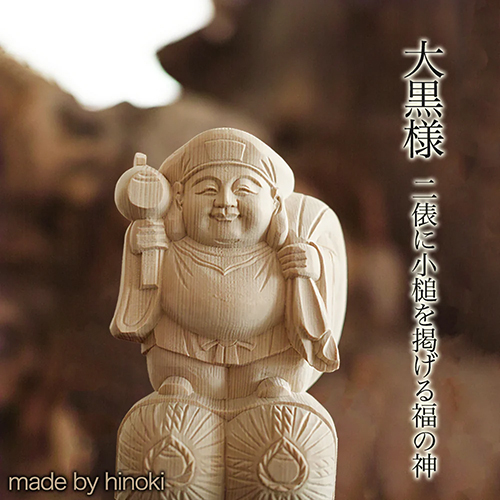
Gallery ▶︎ Browse all Fortune Figures
Transformation of Daikoku Through History
In the Tang dynasty, the monk Yijing (635–713) wrote in his book “A Record of Buddhist Practices Sent Home from the Southern Seas”:
“In the kitchens of Indian monasteries, an image of Mahākāla is enshrined and offered food.”
This is one of the oldest records of Daikokuten.
At that time, the figure was not round or plump, but rather slender and dignified.

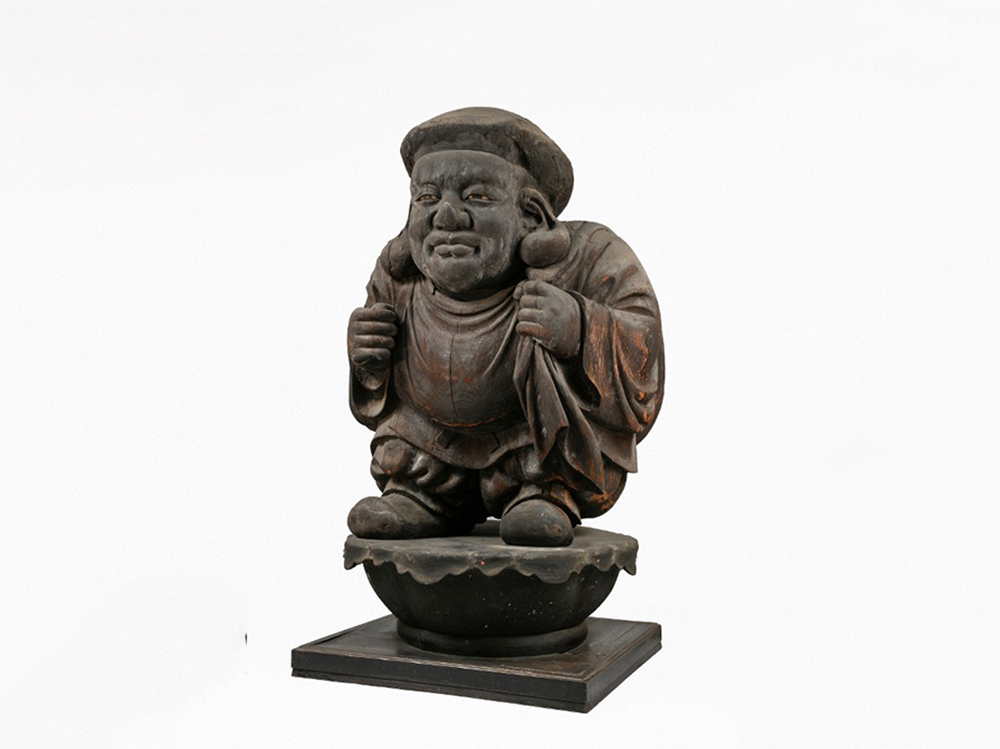
Source: Fukuoka Prefectural Board of Education
In Japan, the deity was transmitted along with Esoteric Buddhism by Kūkai (774–835). During the Heian period, Daikoku still retained a wrathful expression.
Later, he syncretized with Ōkuninushi, a Japanese deity, and in the Muromachi period he was chosen as one of the Seven Lucky Gods.
The familiar, cheerful Daikoku we know today emerged during this era.
Source: Mainichi Newspaper Digital
Mantra of Daikokuten
Daikokuten has long been revered within Esoteric Buddhist traditions.
In Esoteric Buddhism, each deity possesses a unique mantra.
On Makakyaraya Sowaka
This is the sacred mantra of Daikoku-sama.
It expresses the wish to “drive away misfortune with great divine power and invite prosperity.”
Siddham Seed Syllable — The Symbol of Daikokuten
The Siddham character (seed syllable) for Daikokuten is “Ma.”
This represents the “great” in Mahākāla and symbolizes vast, expansive spiritual power.

Siddham characters are prayers made visible. Simply wearing or gazing at them is considered an act of devotion.
Blessings and Benefits (Goriyaku)
Daikoku-sama
A benevolent guardian who pacifies darkness and invites good fortune — protecting wealth, food, home, and relationships.
He grants a sense of inner abundance and steady, prosperous flow.
Blessings include:
Prosperity in harvest, financial luck, business success, family fortune, matchmaking,
protection from misfortune, fertility & safe childbirth, warding off evil,
career advancement, health & longevity, culinary blessings, traffic safety, arts & performance,
wish fulfillment, prosperity, agricultural abundance, and overall good fortune.
Daikoku-sama — A God Who Embraces Both Light and Shadow
Light and shadow, seen and unseen, branches and roots.
All things have two sides that influence one another.
Daikoku, originally the fearsome night-form of Shiva, transformed in Japan into a smiling god of abundance.
Today, Daikoku-sama is considered the most popular of the Seven Lucky Gods.
He was also worshiped by figures such as Oda Nobunaga, Toyotomi Hideyoshi, and Tokugawa Ieyasu.
Even now, he remains one of Japan’s most widely revered deities of fortune.

At Manakonooto, we offer a small but carefully selected collection of Daikoku statues sourced directly from workshops in China.
Stock is limited and often sells out quickly.
Please browse the collection while items are available ▼
https://shop.manakonooto.com/en/collections/engimono
We hope this becomes a meaningful encounter for you.
p.s
I have photographed over one hundred thousand Buddhist and fortune-figure statues.
Through this work, I came to understand that these images were
“born from ancient scriptures and human imagination,”
and that they still serve as vessels of prayer today.
This fascination ultimately led me to begin curating and studying them deeply.
I continue to learn every day.
《 About Manakonooto 》
Manakonooto creates and sells handcrafted small objects made from visually distinctive Japanese hardwoods.
Browse Fortune Figures ▼ See the Collection
If you have any questions, feel free to contact us.
《 Related Articles 》
・Articles on the Seven Lucky Gods ▼
Hotei /
Daikokuten /
Ebisu /
Benzaiten /
Fukurokuju /
Jurojin /
Bishamonten
《 Related Products 》
・Fortune Figure Collection ▼
https://shop.manakonooto.com/en/collections/engimono
《 For First-Time Visitors 》
・About Manakonooto and our products ▼
https://manakonooto.com/products/