“`html
“Kannon” is the Bodhisattva of loving compassion who saves all beings.
In Japan, when people think of Buddhist statues, Kannon is often the first image that comes to mind.
The character 「音」 (sound) represents the wishes and cries of all living beings, while 「観」 (to see/observe) means to listen attentively.
In other words, the name Kannon carries the meaning of “hearing every voice and responding with salvation.”
Kannon’s thirty-three manifestations suggest a compassion that does not hesitate to use any skillful means to bring relief.
Origins and Transmission (India → China → Japan)
Scriptural Origins of Kannon|The Universal Gate Chapter
Kannon’s origin lies in India.
The foundational scripture is Chapter 25 of the Lotus Sutra, one of its 28 chapters, titled “The Universal Gate of the Bodhisattva Avalokiteśvara” (commonly called the “Kannon Sutra”).
This chapter is thought to have been compiled sometime between the 1st century BCE and the 1st century CE.
Since the Buddha’s passing (parinirvāṇa) is traditionally dated to 486 BCE, this means about 500 years had passed.
This Universal Gate Chapter is the first scripture to clearly describe Kannon (Avalokiteśvara) as a Bodhisattva.
Here, the Buddha’s core teaching of “compassion” is personified in the figure of Kannon Bodhisattva.
The famous stories of Kannon transforming into thirty-three different forms to respond to every kind of suffering also originate in this Universal Gate Chapter.
In early Indian depictions, Avalokiteśvara was portrayed as male, and some statues even show him with a beard.
The Spread of Kannon Devotion in China
Kannon’s Sanskrit name is Avalokiteśvara.
When it was later translated into Chinese, Ava was understood as “downward,” lokita as “looking/observing,” and eśvara as “sovereign, lord,”
and so it became the name Guanyin (or Guanshiyin), “the one who observes the sounds of the world.”
As Buddhism traveled along the Silk Road into China, devotion to Kannon also spread.
One of the earliest translators of these scriptures was the monk Dharmarakṣa (Chinese: 竺法護, c. 232–348),
who rendered the Lotus Sutra and related texts into Chinese and used the name “Guanshiyin.”
This name literally means “the one who looks upon the sounds of the world,” and it was understood as a being who hears the cries of suffering and brings rescue.
Later, the famous translator Kumārajīva (344–413) also included Kannon in his Chinese translation of the Lotus Sutra,
helping to establish the figure deeply within Chinese Buddhism.
Around this time, the expression “Guanzizai” (the Bodhisattva of Perceiving Freedom) also came into use, emphasizing Kannon’s free and compassionate activity in saving living beings.
During the Sui (581–618) and Tang (618–907) dynasties, state patronage allowed devotion to Kannon to flourish even further.
The Tang monk Xuanzang (602–664) brought back a great number of scriptures from India,
and through these texts Kannon came to be firmly regarded as the embodiment of compassion itself.
From the Tang period onward, depictions of Kannon gradually shifted away from earlier, more masculine forms
toward gentler images with a more feminine appearance.
Arrival in Japan|The Oldest Kannon Statue: Kudara Kannon
Devotion to Kannon came to Japan together with Buddhism during the Asuka period (6th–7th century).
One especially symbolic example is the national treasure known as the “Kudara Kannon,”
which is enshrined at Hōryū-ji Temple and associated with Prince Shōtoku.
With its refined and serene presence, this statue is widely regarded as one of the oldest surviving Kannon images in Japan.
Another famous example is the hidden statue of Kannon (Shō Kannon) enshrined at Sensō-ji Temple in Tokyo.
According to tradition, it was caught in the net of fishermen in the 36th year of Empress Suiko’s reign (628 CE).
For nearly 1,400 years since the temple’s founding, “Asakusa Kannon” has been deeply revered,
and even today countless visitors come to pray there.
Along with these legends and stories, Kannon devotion was embraced by the aristocracy during the Nara and Heian periods,
and over time it spread beyond class and region throughout Japan.
As a focus of prayer for help and protection in this very life, Kannon faith took deep root among common people as well,
and to this day Kannon remains one of the most familiar and beloved Buddhist figures for people in Japan.
Mantra
Kannon Bodhisattva is also central in Esoteric Buddhism,
and many sacred mantras (dharani) related to Kannon have been passed down.
On Arorikya Sowaka
It is believed that by chanting this mantra of Kannon Bodhisattva,
one can awaken the compassionate and saving power of Kannon within one’s own heart.
Seed Syllable (Bonji) — The Power of the Sacred Letter
In Japanese Esoteric traditions (such as Shingon and Tendai), the seed syllable for Kannon is commonly “Sa.”
This character is often inscribed on talismans, pedestal bases, and engraved inscriptions.

Blessings and Benefits (in Modern Terms)
Kannon is associated with countless forms of protection and support.
Some of the most representative blessings include:
Protection from misfortune and calamity・Peace and safety in this life・Fulfillment of wishes
Recovery from illness・Health and longevity・Good fortune and prosperity・Safe childbirth and fertility
Support in child-rearing・Family safety・Harmonious relationships and good connections
Kannon — The Bodhisattva of Compassion Who Saves from Suffering|Avalokiteśvara
The essence of Kannon Bodhisattva can be summed up in a single point: a vow to save all beings through boundless compassion.
This compassion is not limited to any single gender or form; it can appear as a gently smiling figure or as a fierce, wrathful presence.
From the powerful, dynamic image of Horse-Headed Kannon to the tender form of a mother holding a child,
every manifestation arises in direct response to the specific suffering and wishes of living beings.
These many different forms are not contradictions, but expressions of one and the same vow:
“Never abandon anyone, no matter their situation.”
Because of this, Kannon has guided the hearts of warriors in times of war,
and has long stood beside ordinary people praying for safe childbirth, healing from illness, and everyday protection.
Kannon transcends both form and era, and lives within our hearts even now.
Whether we are seeking help in the midst of hardship, or wishing to share joy with someone dear,
Kannon’s presence quietly stays close and offers guidance.
This universal and timeless compassion is a major reason why devotion to Kannon has continued to inspire people from ancient times to the present.

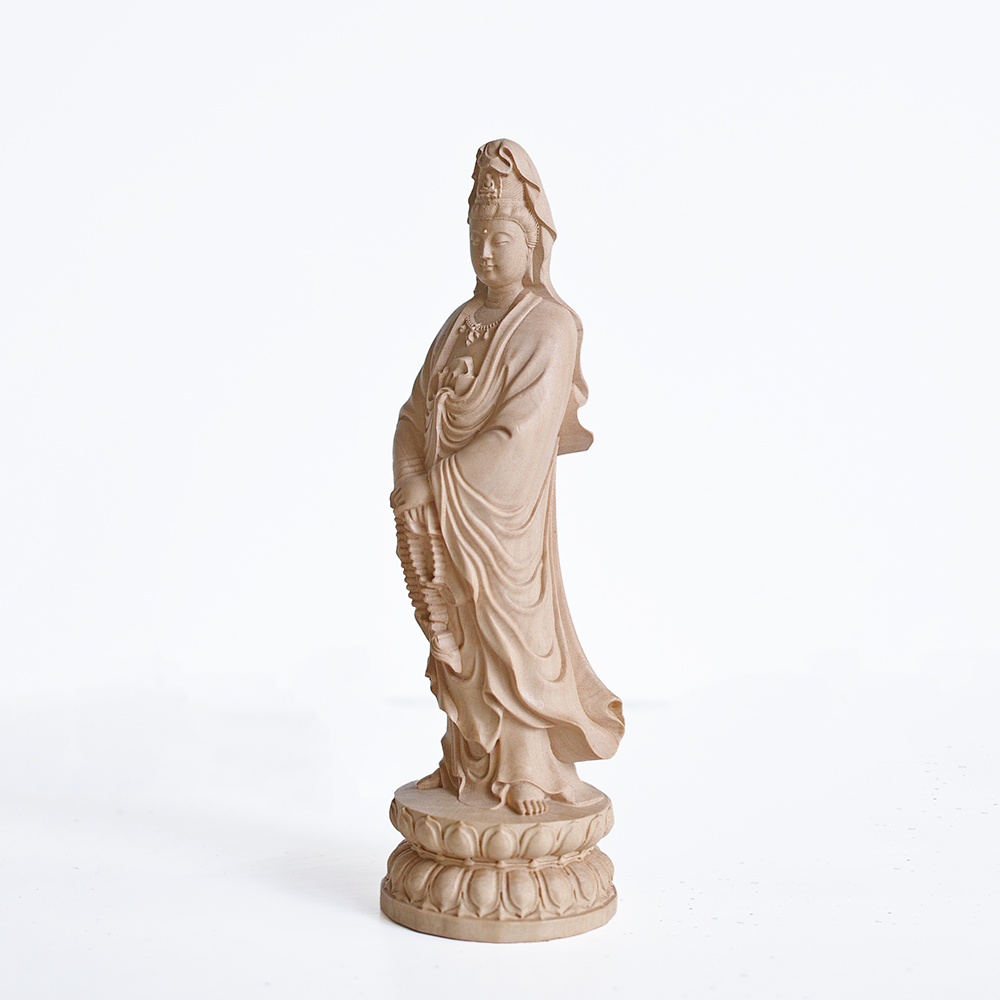
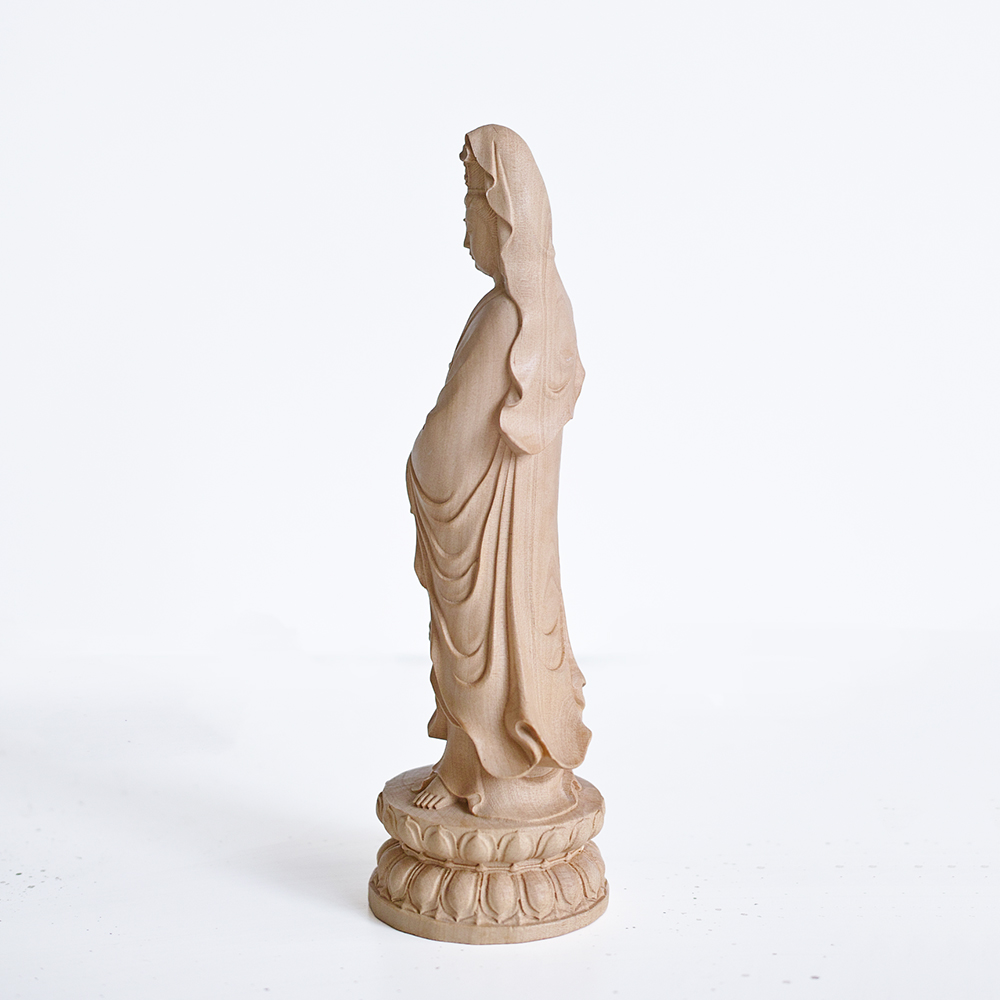
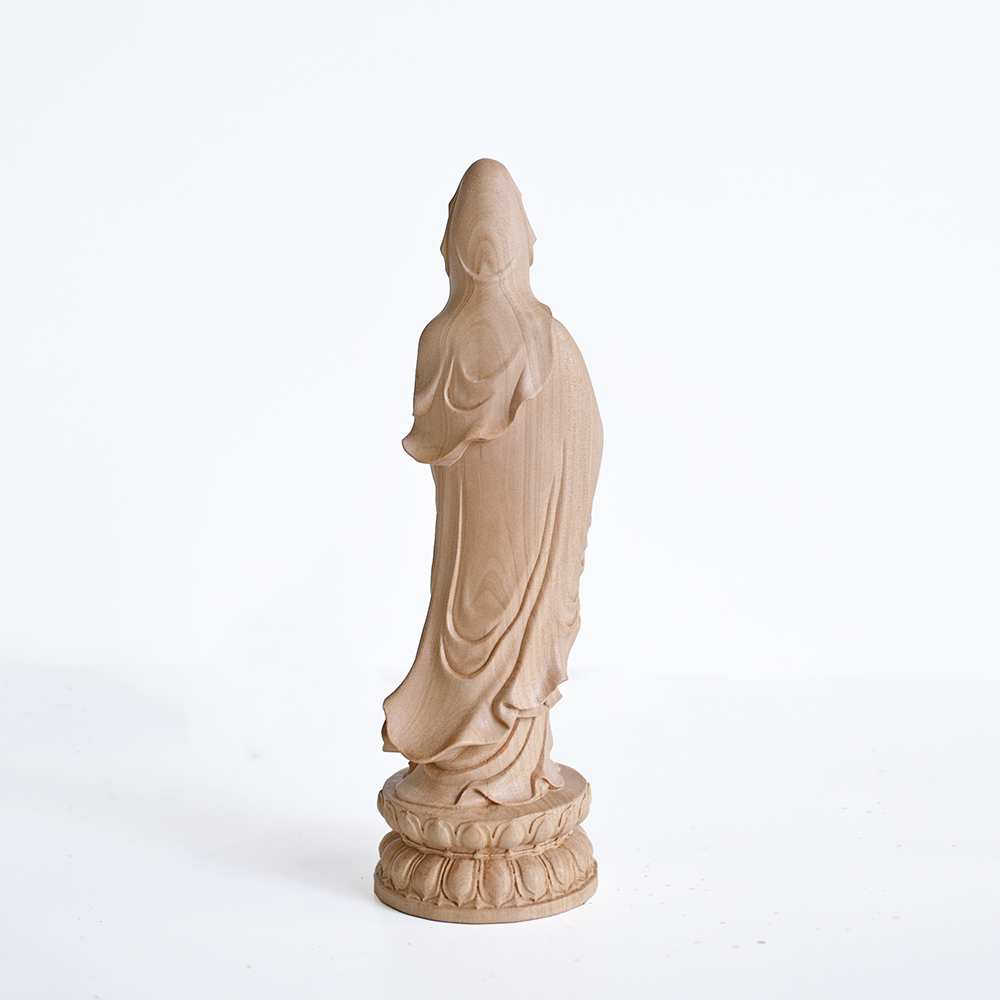

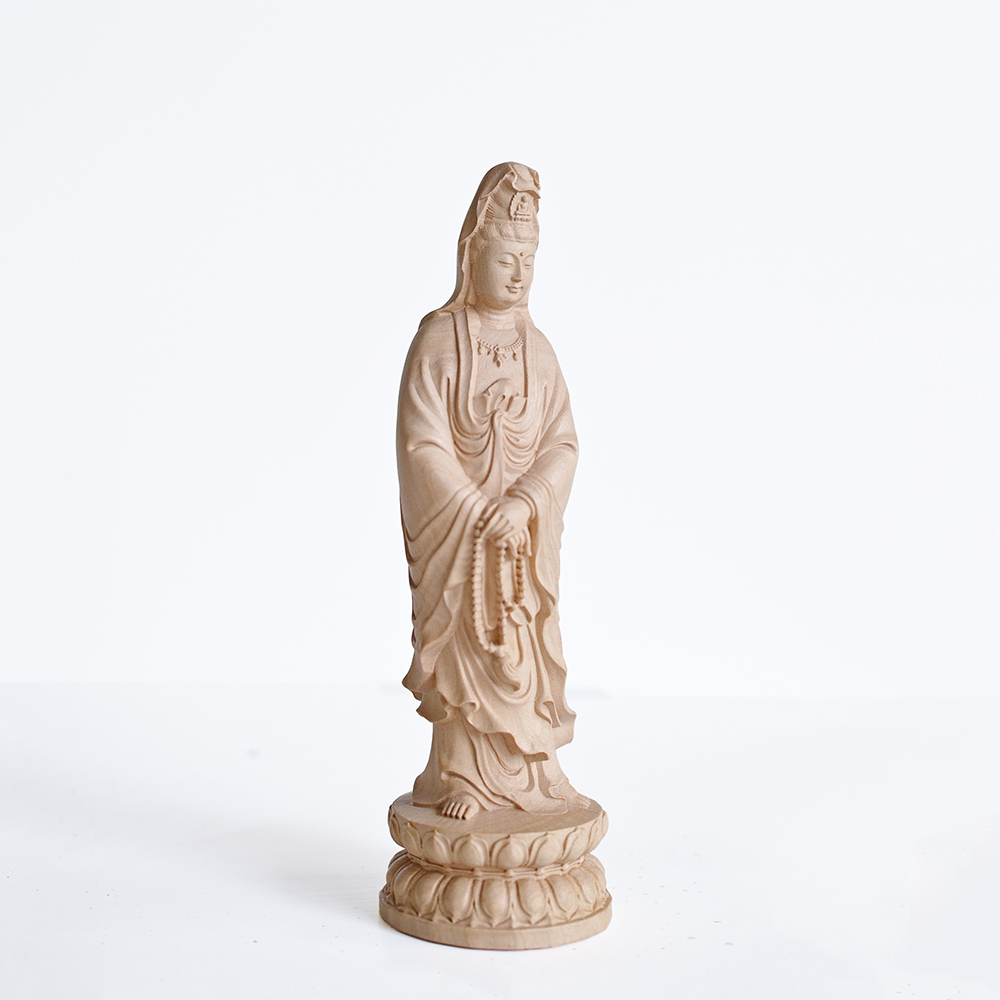
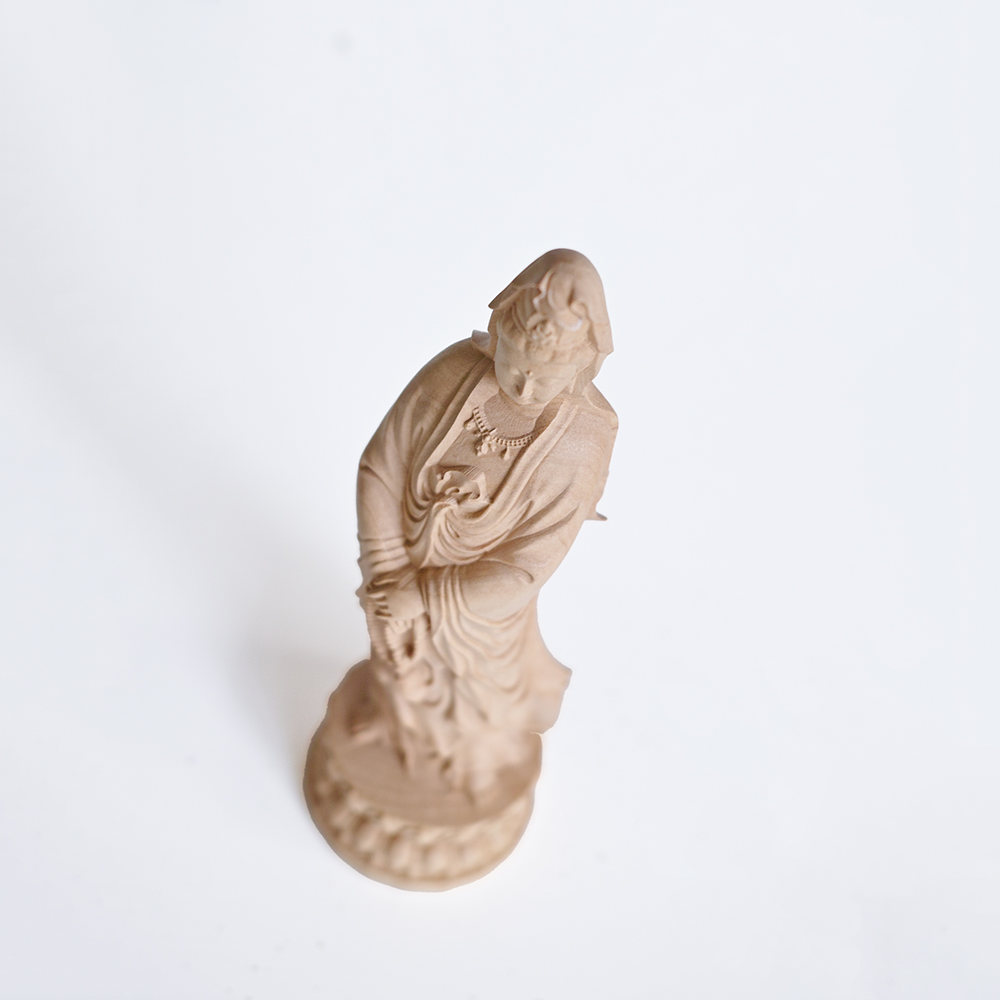
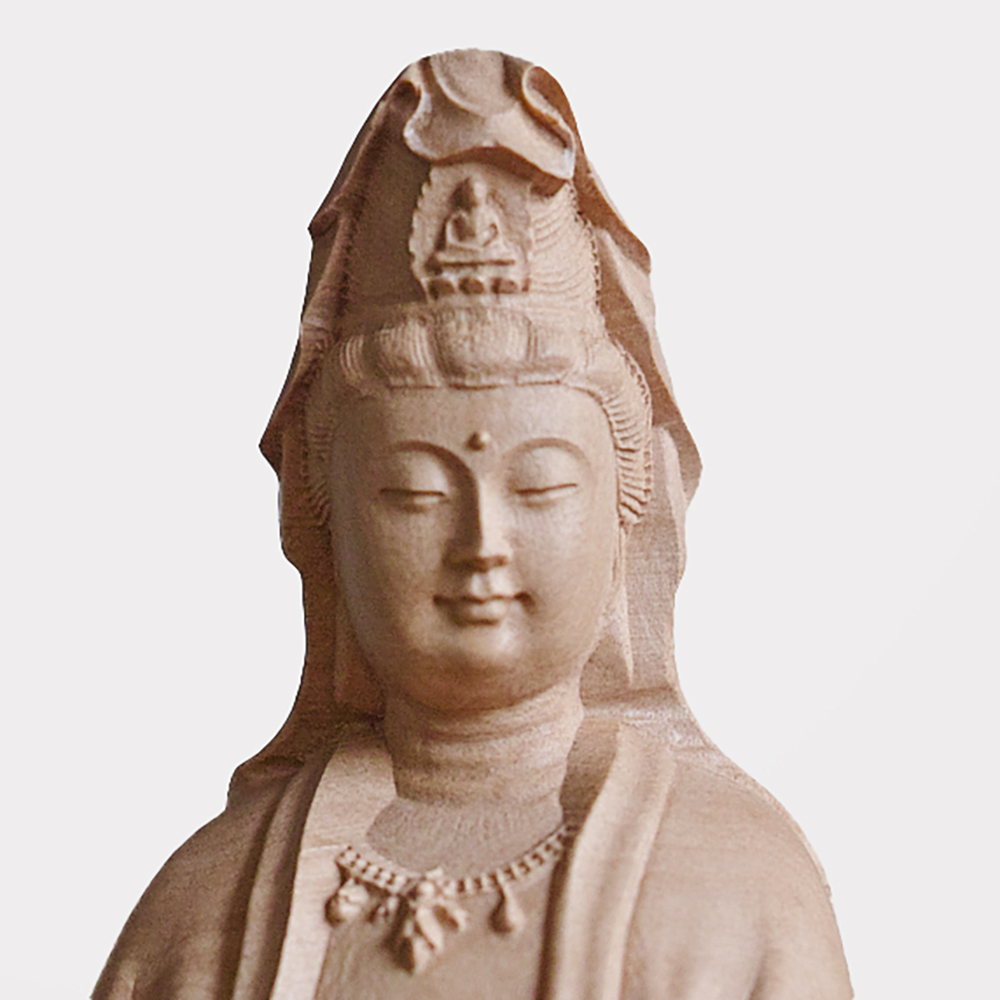
At Manako no Oto, we carry a small selection of Kannon statues
that I personally source and carefully select from workshops in China.
Because stock is very limited (and items may occasionally be sold out),
please take this opportunity to browse and consider them while they are available▼
https://shop.manakonooto.com/en/collections/engimono
If you have found your way to this page, we hope it will be a helpful guide and a meaningful encounter.
《 About Manako no Oto 》
Manako no Oto creates and sells small handcrafted items
made from distinctive Japanese hardwoods with unique grain and character.
Browse our curated Engimono collection▼
▷View Engimono
If you have any questions, please feel free to contact us.
《 Related Articles 》
・Learn more about the Seven Lucky Gods▼
Hotei / Daikokuten / Ebisu / Benzaiten / Fukurokuju / Jurojin / Bishamonten
《 Related Products 》
・All “Engimono” (Auspicious Items)▼
https://shop.manakonooto.com/collections/en/engimono
《 For First-Time Visitors 》
・About Manako no Oto and our products▼
https://manakonooto.com/products/
“`